



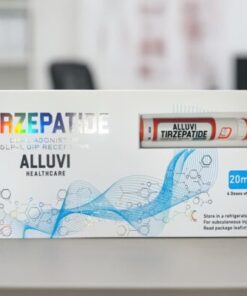
Alluvi Glow 70mg (R&D Only) – Peptide Research Compound Information
Overview of Alluvi Glow Peptide Research
Alluvi Glow 70mg (R&D Only) is associated with the expanding field of peptide research within modern biotechnology and molecular science. Peptides are short amino-acid chains that act as signaling molecules in biological systems. Because of their structural specificity and ability to interact with receptors and proteins, peptides are widely used in laboratory research.
Research programs in biotechnology and molecular biology often analyze peptide molecules to understand cellular communication, biochemical signaling pathways, and metabolic processes. Synthetic peptides allow researchers to investigate molecular interactions in controlled laboratory environments.
Within peptide research programs, compounds such as Alluvi Glow are studied to explore how specific amino-acid sequences interact with biological systems and contribute to the understanding of molecular signaling networks.
Peptides in Modern Biotechnology
Peptides are fundamental tools in modern biotechnology. Many natural biological processes rely on peptide-based communication between cells. Hormones, enzymes, and regulatory proteins frequently contain peptide structures.
In laboratory research, synthetic peptides are designed with specific sequences that allow scientists to examine receptor interactions and intracellular signaling pathways. These experiments help researchers understand how biological systems respond to different molecular signals.
The ability to produce peptides with high structural accuracy has greatly expanded the possibilities of biochemical research.
Molecular Structure of Research Peptides
Peptides are composed of amino acids connected by peptide bonds. The sequence and arrangement of these amino acids determine the structure and function of the molecule.
Advanced peptide synthesis techniques enable scientists to construct peptides with precise molecular configurations. The most common method used in peptide production is solid-phase peptide synthesis (SPPS), which allows researchers to assemble peptides step by step.
After synthesis, peptides are analyzed and purified using specialized laboratory technologies to ensure structural accuracy and purity.
Analytical Technologies Used in Peptide Research
Researchers studying peptide compounds rely on advanced analytical tools to evaluate molecular structure and biochemical properties. Some of the most commonly used technologies include:
-
High-Performance Liquid Chromatography (HPLC)
-
Mass Spectrometry Analysis
-
Molecular Structure Characterization
-
Protein Interaction Studies
-
Computational Molecular Modeling
These methods allow scientists to examine peptide stability, structure, and interactions with biological molecules.
Importance of Peptide Science in Research
Peptide science has become one of the fastest-growing fields in biotechnology research. Scientists across multiple disciplines use peptides to explore complex biological mechanisms.
Major research areas involving peptides include:
Molecular Biology
Peptides help scientists study protein interactions and cellular signaling pathways.
Biochemistry
Researchers use synthetic peptides to investigate enzyme activity and metabolic processes.
Cellular Communication
Peptide molecules can influence signaling networks between cells, making them valuable tools for studying biological communication systems.
Biotechnology Development
Many modern biotechnology technologies rely on peptide-based experimental models.
Global Expansion of Peptide Research
The peptide research industry has expanded rapidly due to advances in biotechnology, improved synthesis technologies, and increased scientific investment worldwide.
Research institutions, universities, and biotechnology companies continue to explore peptide molecules to better understand biological systems and molecular signaling pathways.
Countries with strong biotechnology sectors—including the United States, the United Kingdom, Germany, Japan, and Brazil—play important roles in the development of peptide science.
Future of Peptide Research
The future of peptide research is expected to grow as new technologies such as artificial intelligence and molecular modeling become more integrated into biotechnology research.
These innovations allow scientists to design peptide structures more efficiently and analyze how different molecular sequences interact with biological systems.
As scientific research advances, peptides will remain essential tools for studying cellular communication and biochemical processes.
Be the first to review “Alluvi Glow 70mg”
Related products

PRODUCTS



PRODUCTS
PRODUCTS


Reviews
There are no reviews yet.